Beyond the Shift: How I Reclaimed My Mental Peace While Working Nights
"Nobody warned me about the emotional tax of living on a reversed clock. Here's how I stopped forcing a daytime life onto a night shift schedule, and started protecting my mental peace instead."
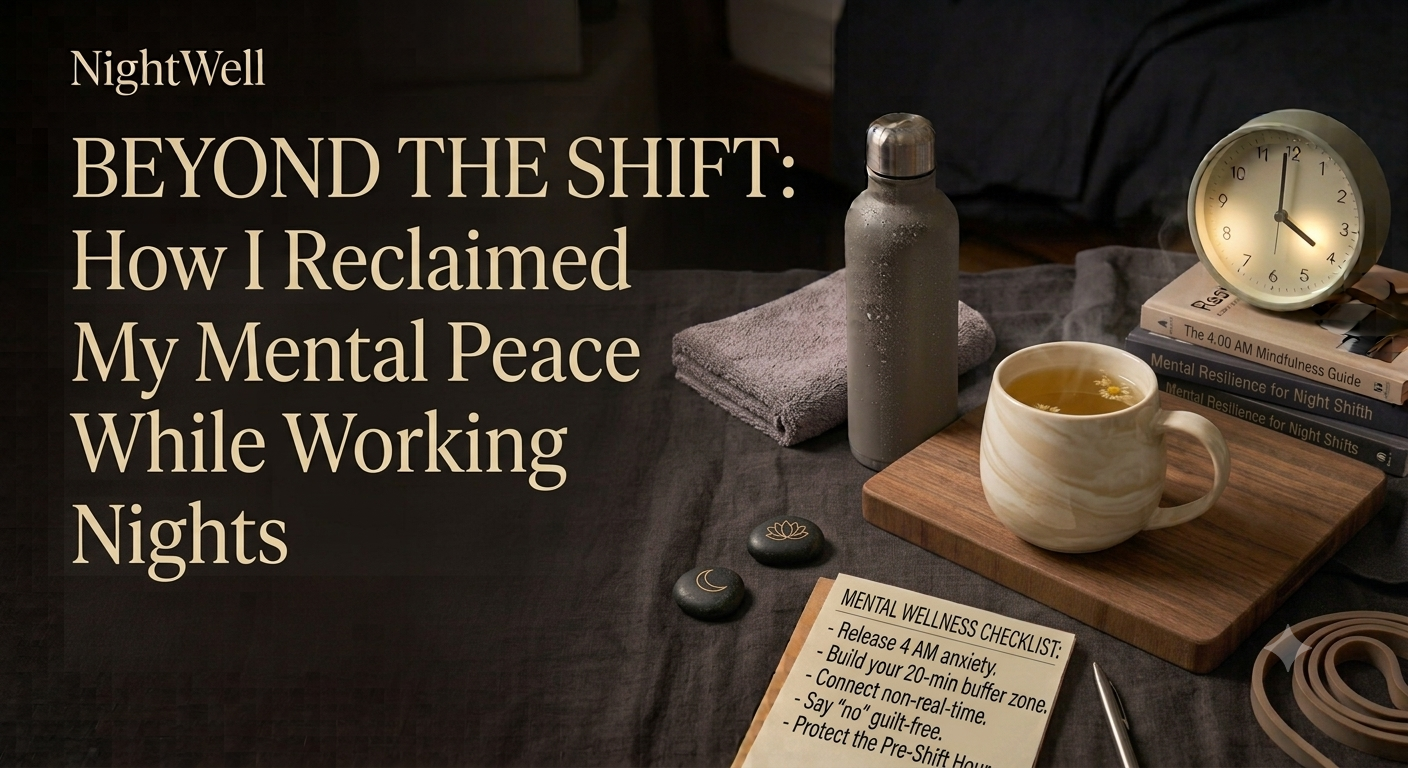
Beyond the Shift: How I Reclaimed My Mental Peace While Working Nights
There's a very specific kind of quiet that hits around 4 AM. The rest of the world is deep asleep, and you're under humming fluorescent lights, checking on patients, charting, pacing a quiet hallway. On paper, night shift sounds like just a schedule swap. In reality, the isolation of it doesn't just wear on your body — it quietly wears on your mind.
When I first started working nights, I put all my energy into surviving it physically. Blackout curtains, fasting timers, a post-shift wind-down routine — I dialed all of it in. What nobody warned me about was the emotional tax of living life on a reversed clock.
You miss family dinners. You miss the group chat blowing up in real time because you're either waking up or heading into work. You open your eyes at 2 PM while the rest of the world is mid-hustle, and you're hit with this strange mix of brain fog and guilt you can't quite explain. Left alone, that disconnect slowly turns into anxiety, mood swings, and burnout that sneaks up on you.
Getting my mental footing back didn't happen overnight, and it didn't come from doing more. It came from dropping the expectation that I had to keep up with a daytime life and work nights, and instead putting real boundaries around my mind, not just my sleep schedule. Here's what actually helped.
1. Grieving the "Normal" Routine (and Letting Go of the Guilt)
For a long time, I felt guilty every time I skipped a family event or had to sleep through something happening in the daytime world. I kept trying to squeeze a standard daytime social life into a schedule that was never built for it.
The turning point was when I stopped treating my night shift life like a problem I needed to fix. Working overnight was a real choice I made for my career and my family — it just runs on a different rhythm than everyone else's.
The shift: I gave myself permission to say no to daytime plans without the guilt attached. My 1 PM is someone else's 2 AM. Nobody expects a daytime worker to show up to a party at 2 in the morning, so I stopped expecting that of myself during my core sleep hours.
2. Fighting the 4 AM Isolation Trap
The loneliness of overnight work is real in a way I wasn't prepared for. When your mind starts spiraling at 3 or 4 AM, you can't just call a friend or text your mom — everyone you'd normally reach out to is asleep. That forced isolation makes ordinary stress feel twice as heavy.
The shift: I built a connection routine that doesn't depend on real-time replies. I started leaving voice notes for friends before my shift, so I'd wake up to something waiting for me instead of silence. I also leaned harder into the people who actually get it — coworkers during quiet moments on shift, and online communities built specifically for overnight workers. Knowing someone else out there understands the exact weirdness of 4 AM makes the world feel a lot less lonely.
3. Building a Decompression Bridge Between Work and Home
When my shift ends at 6 AM, my instinct used to be to rush straight home and force myself into bed before the sun got too bright. But carrying the adrenaline and heavy moments of a 12-hour shift straight into my sheets is a guaranteed recipe for racing thoughts and bad sleep.
The shift: I made a mandatory 20-minute buffer between clocking out and getting into bed. A calming podcast or soft music for the drive home. Blue-light blocking glasses on the second I step outside into morning sun, so my brain isn't getting hit with a cortisol spike right when I need it to wind down. Once I'm home, a few minutes of light stretching or slow breathing before I actually lie down.
4. Protecting the Hour Before My Shift
Before heading in at 10 PM, it used to be easy to spend the whole evening frantically cleaning, running errands, or catching up on chores right up until the second I had to walk out the door. By the time I clocked in, my mental battery was already sitting at 50%.
The shift: I treat the 60 minutes before my shift like sacred quiet time now. A warm cup of tea, something calming to listen to, or just sitting in silence without a screen in front of me. Walking into a 12-hour night from a place of calm instead of chaos changes how I handle everything that gets thrown at me mid-shift.
The Takeaway: You Can't Pour From an Empty Battery
Working nights takes real resilience, but resilience was never about pushing through exhaustion until you break. It's about knowing your mental health matters exactly as much as your physical health does — not as an afterthought to it.
If you're feeling the weight of night shift right now, start with one thing. Say no to an afternoon plan without the guilt. Build a calm drive-home routine. Carve out ten quiet minutes before you leave for work. You're doing hard, vital work while the rest of the world sleeps — give yourself the same care you give everyone else on your shift.
Want your wind-down and pre-shift routine mapped out alongside your sleep and meals? I built a free Schedule Builder on NightWell to help you plan your whole shift, not just the physical side of it.
Join the NightWell Newsletter
Night shift tips, healthy recipes, sleep advice, meal plans, and weekly wellness delivered to your inbox.
Comments
Be the first to comment.
Sign in to leave a comment.