Meal Planning
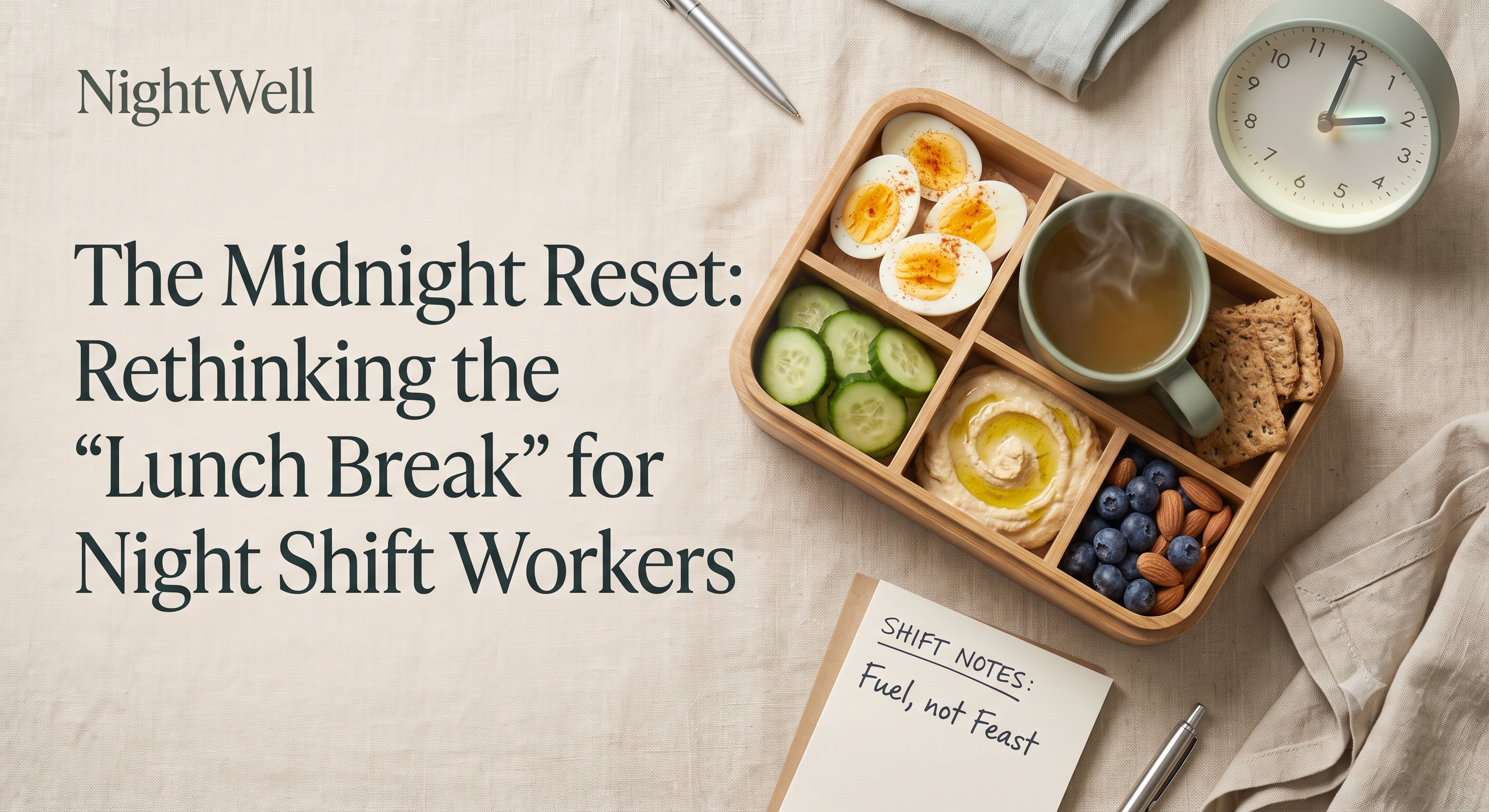
The Midnight Reset: Rethinking the “Lunch Break” for Night Shift Workers
For most of the world, midday means stepping away from the desk for a hearty lunch to fuel the rest of the afternoon. But when you work the night shift, your "midday" lands somewhere around 2:00 AM.
When that scheduled break rolls around, it’s incredibly tempting to dive into a heavy meal—a greasy takeout order, a massive plate of leftovers, or a dense sandwich. Your body is tired, and food feels like the ultimate comfort.
However, eating heavy meals in the dead of night can throw a major wrench into your wellness goals, your digestion, and your sleep quality. Today, let’s talk about how to rethink meal planning for the night shift, why lighter is often better, and how to practice mindful eating that respects your unique body.
The 2 AM Digestion Trap
Our bodies operate on a circadian rhythm—an internal clock that expects us to be active during the day and resting at night. Even if you are wide awake and working hard under fluorescent lights, your digestive system slows down naturally after dark.
When you introduce a heavy, complex meal into a sluggish digestive tract at 3:00 AM, a few things happen:
The Energy Crash: Your body redirects massive amounts of energy to digest the food, making you feel incredibly groggy right when you need to stay sharp.
Heartburn and Bloating: Lying down to sleep a few hours after a heavy meal can cause acid reflux and disrupted sleep.
Metabolic Shift: Research suggests our bodies don't process fats and sugars as efficiently during nighttime hours.
The Golden Rule for Night Shifts: Think of nighttime eating as fueling, not feasting. Aim for small, frequent, nutrient-dense snacks rather than a traditional three-course dinner.
Every Body is Different: A Note on Health Conditions
Before we dive into meal prep strategies, it is incredibly important to acknowledge that nutrition is never one-size-fits-all.
While minimizing heavy food at night works wonders for many, it isn't a blanket rule. If you live with certain medical conditions—such as Type 1 or Type 2 diabetes, hypoglycemia, or specific gastrointestinal conditions—your body might need consistent, substantive fuel at specific intervals, regardless of what the clock says.
Listen to your medical team: Always prioritize the dietary schedules and requirements prescribed by your doctor or dietitian.
Listen to your body: If you feel weak, shaky, or genuinely hungry, your body is asking for energy. Mindful eating means honoring those signals without judgment.
Smart Meal Planning for the Night Shift
If you are looking to lighten the load on your digestive system while staying energized, preparation is your superpower. When you don't pack a plan, the vending machine wins.
Here is how to structure your shift-work meal prep:
1. The "Before-Shift" Anchor Meal
Eat your largest, most substantial meal before you head into work (around 5:00 PM or 6:00 PM). This aligns closer to standard dinner hours when your metabolism is still firing efficiently. Focus on complex carbohydrates, lean protein, and healthy fats to give you a long, sustained release of energy.
2. Pack a "Graze Box" for the Night
Instead of one massive Tupperware container for your main break, pack a variety of smaller, easily digestible options.
Proteins: Hard-boiled eggs, Greek yogurt, cottage cheese, or a handful of almonds.
Carbs/Fiber: Sliced cucumbers with hummus, berries, or oatmeal.
The Comfort Factor: A warm thermos of bone broth or vegetable soup can be incredibly soothing at 2:00 AM without feeling heavy.
3. The Pre-Bed Snack
Going to bed starving is just as bad as going to bed stuffed; hunger pangs will wake you up prematurely. Before you go to sleep in the morning, have a tiny, sleep-supportive snack. A banana with a smear of peanut butter or a small bowl of whole-grain cereal can help keep you asleep until your alarm goes off.
Mindful Eating: The Ultimate Goal
Ultimately, the goal at NightWell is to help you build a routine that makes you feel vibrant, rested, and healthy.
If you realize you’ve been relying on heavy night meals out of boredom or exhaustion, try swapping them for lighter, protein-packed alternatives this week and see how your energy shifts. But if your health requires a different path, walk that path with confidence.
What is your go-to night shift snack? Let us know in the comments below!
Author's Note
I'm a fellow night shift worker sharing what has helped me along with general wellness information. This article is for educational purposes and isn't a substitute for personalized medical or nutrition advice. If you have a medical condition or specific dietary needs, consult your healthcare provider or a registered dietitian before making significant changes to your eating routine.
Join the NightWell Newsletter
Night shift tips, healthy recipes, sleep advice, meal plans, and weekly wellness delivered to your inbox.
Comments
Be the first to comment.
Sign in to leave a comment.