The Daytime Sleep Sanctuary: Blackout Curtains, Temperature, and Cortisol Control
Sleeping during the day isn't the same task as sleeping at night with the lights off. Here's the temperature, blackout, blue-light, and noise setup that finally made daytime sleep feel like real rest instead of a nap I was fighting for
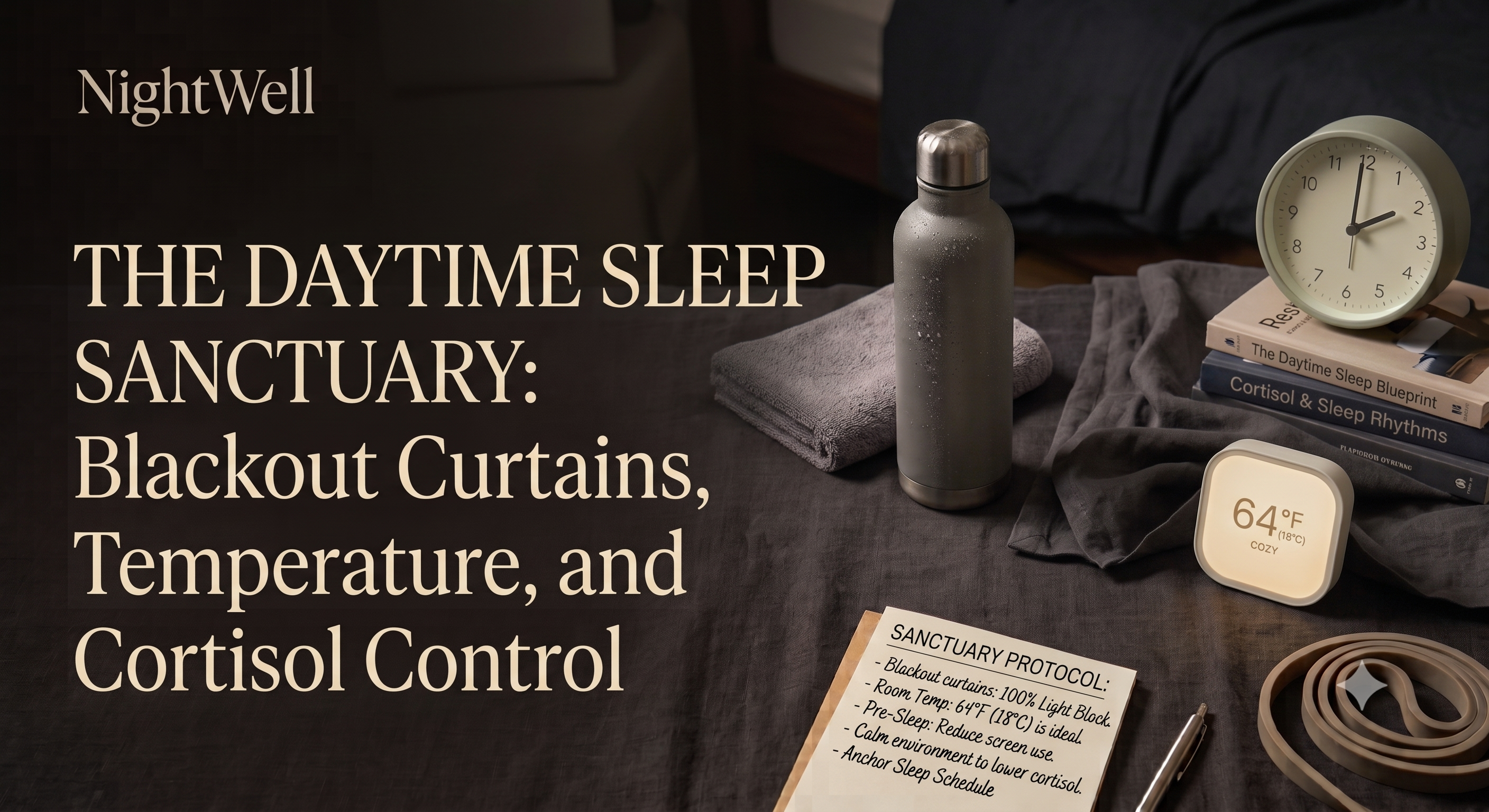
The Daytime Sleep Sanctuary: Blackout Curtains, Temperature, and Cortisol Control
For the first year or two of working nights, I slept in the same bedroom, the same bed, the same setup I'd always used — just during the day instead of at night. And I could never figure out why my sleep felt so much worse than it used to, even on nights I wasn't especially tired or stressed.
What I eventually realized is that "sleeping during the day" isn't the same task as "sleeping at night" with the sun up instead of down. Your body is working against its own biology the entire time — daylight is telling your brain to be alert, the neighborhood is awake and loud, and your internal cortisol rhythm is naturally rising instead of falling. Regular nighttime sleep habits weren't going to cut it. I needed to actually build a different environment, on purpose, instead of just closing my eyes and hoping.
Here's what changed things for me.
Temperature Matters More Than I Realized
I used to keep my room at whatever temperature felt "normal" — somewhere in the low 70s. Once I started deliberately cooling it down to somewhere between 60°F and 67°F, I noticed a real difference in how deep my sleep felt, especially getting into REM.
Your body naturally drops its core temperature to initiate sleep, and daytime heat from sunlight coming through windows or just a warmer house during the day works against that drop. A cooler room helps your body do what it's already trying to do, instead of fighting the extra warmth of the day on top of everything else.
The Blue Light Problem Starts Before You Even Get Home
This one surprised me. I used to think my "sleep setup" started when I walked through my front door. It doesn't — it starts the moment I leave the building at the end of my shift.
The drive home is often the worst part, light-wise. Morning sunlight is bright, direct, and exactly the wrong signal to be sending your brain if you're about to try to sleep. I started wearing blue-light blocking glasses (the amber-tinted kind, not the clear ones marketed for screen use) for the entire drive home, and it made falling asleep once I got there noticeably easier. If you take public transit or get a ride, the same idea applies — glasses on as soon as you step outside, not after you're already in bed trying to wind down.
Blackout Curtains Are Non-Negotiable, But They're Not Enough Alone
Blackout curtains were the first thing I invested in, and they helped — but they didn't fully solve the problem on their own. Even a small gap of light around the edges, or light bleeding in from under the door, was enough to keep some part of my brain half-alert. What actually closed the gap:
Curtains that extend past the window frame on all sides, not just covering the glass itself
A towel or draft blocker along the bottom of the bedroom door
An eye mask as a backup for the mornings when even a sliver of light gets through
White Noise vs. Brown Noise for Masking Daytime Sound
The other piece nobody warned me about: the world is loud during the day. Garbage trucks, neighbors mowing lawns, kids outside, delivery trucks — none of that exists at 2 AM, but it's a constant soundtrack from 8 AM to 4 PM.
I tried white noise first, since that's what most sleep apps default to, but I found it a little harsh for daytime use — almost too "hissy" for hours-long exposure. Brown noise, which has a deeper, lower rumble (think steady rainfall or a distant waterfall instead of static), worked better for me and masked traffic and outdoor noise more effectively without feeling grating after a few hours.
Building the Full Sanctuary
None of these things individually fixed my daytime sleep. It was stacking all of them together — cooling the room down, blocking light starting from the drive home instead of just at the bedroom door, and finding the right noise to mask the world being awake — that actually made daytime sleep feel like real rest instead of a nap I was fighting for.
Want a full routine built around your actual shift schedule, not just sleep tips in isolation? I put together a free Schedule Builder on NightWell that maps your sleep, meals, and caffeine cutoffs all together.
Join the NightWell Newsletter
Night shift tips, healthy recipes, sleep advice, meal plans, and weekly wellness delivered to your inbox.
Comments
Be the first to comment.
Sign in to leave a comment.